
Shinrin-Yoku: Forest Bathing
In our fast-paced, technology-saturated world, many of us spend increasingly little time simply being present in nature. Yet humans have lived in relationship with the natural world for far longer than we have lived surrounded by screens, notifications, traffic, and artificial environments.
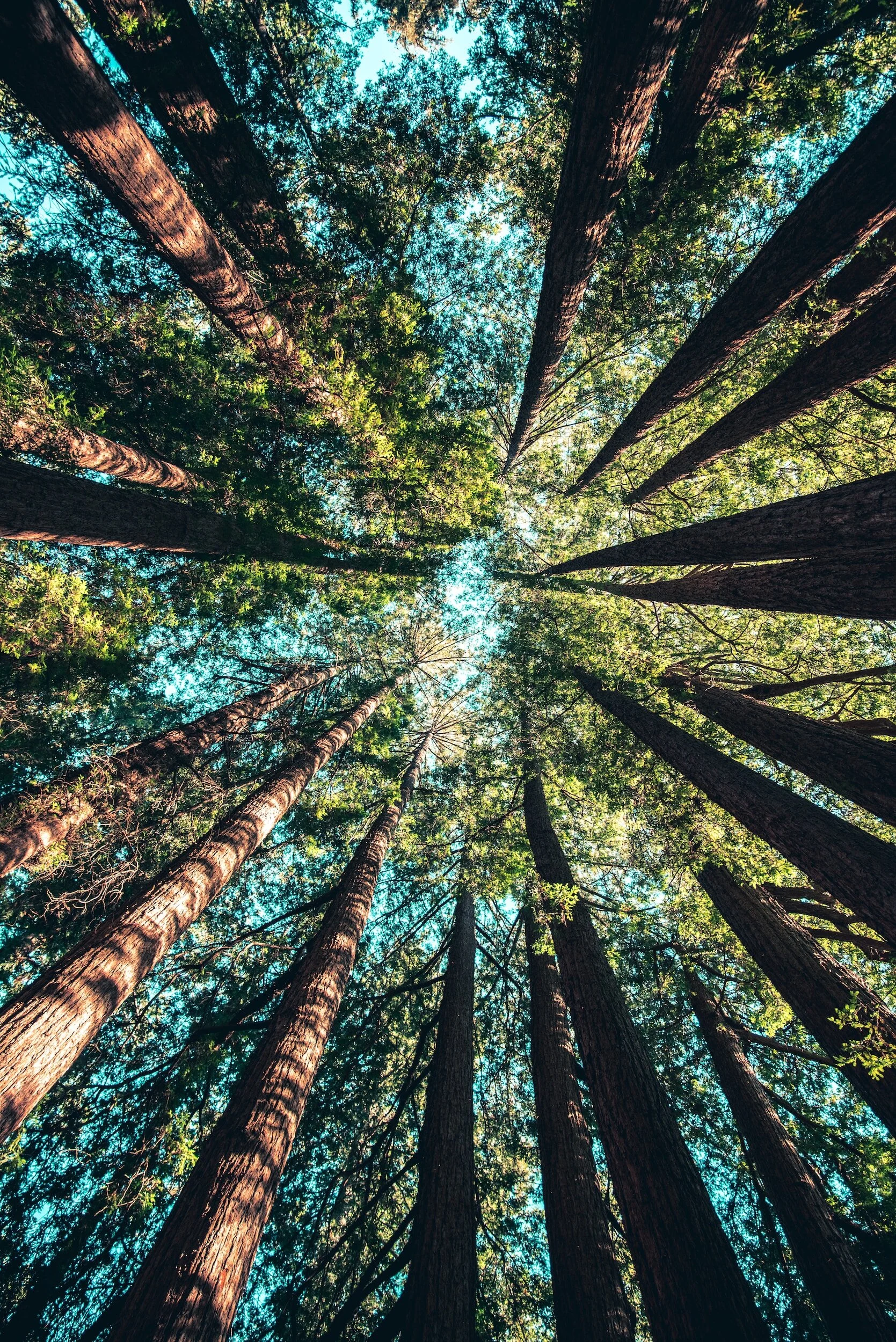
Shinrin-yoku, commonly translated as “forest bathing,” emerged in Japan in the 1980s as a practice of intentionally spending time in a forest environment and engaging with nature through the senses. Despite the English translation, no water—or actual bathing—is required.
And the idea of prescribing nature isn't merely metaphorical. Nature prescriptions are increasingly being incorporated into healthcare systems around the world, with healthcare professionals prescribing or referring patients to time outdoors and nature-based activities as part of a broader approach to health and well-being.
Today, researchers are also exploring how time spent in forests and other natural environments may influence stress, mood, attention, and aspects of physical well-being. While forest bathing is not a replacement for appropriate medical or mental-health care, it offers something many of us desperately need: an invitation to slow down, reconnect with our senses, and remember ourselves as part of the natural world.
Why Forest Bathing?
Growing interest in forest bathing has also inspired researchers to explore what happens when we spend intentional time in forests and other natural environments. While the research is still developing—and not every proposed benefit has been established with the same level of evidence—studies suggest several ways time in nature may support our well-being.
1. Stress Reduction
This is one of the more promising areas of research. Studies of forest bathing and other forms of nature exposure suggest that time in natural environments may help reduce perceived stress and support physiological relaxation. Research has also found changes in measures such as cortisol, heart rate, and blood pressure following forest exposure, although results and study methods vary.
But perhaps we don't need a laboratory to tell us everything about this experience. Many of us already know what it feels like to step away from traffic, screens, responsibilities, and noise and into a place where our attention can soften.
The forest gives us somewhere to notice what happens when we slow down.
2. Immune Function
One intriguing area of forest-bathing research involves phytoncides—airborne compounds released by trees and other plants. Some small studies have found changes in certain markers of immune activity, including natural killer (NK) cell activity, following time spent in forest environments.
Researchers have proposed that exposure to phytoncides may be one factor contributing to these effects, alongside other aspects of the forest environment. However, this research is still developing, and it is too early to conclude that forest bathing broadly “boosts” the immune system or prevents illness.
What we can say is that forests expose us to a remarkably complex biological environment—and scientists are continuing to explore how interacting with that environment may affect human health.
3. Mood & Emotional Well-Being
Research on forest bathing and nature exposure has found associations with reduced perceived stress, anxiety, and depressive symptoms, as well as improvements in mood and emotional well-being. The strength of the evidence varies across outcomes, and forest bathing should not be understood as a replacement for mental-health treatment when it is needed.
Still, stepping into nature can change the quality of our attention. Forest environments invite us away from constant stimulation and toward sensory awareness: listening, noticing, breathing, wandering, and simply being.
For many people, that shift can create space to feel more grounded, present, and connected.
4. Attention & Mental Restoration
Time in nature may also support attention and mental restoration. Research exploring nature exposure suggests that natural environments can offer a different kind of sensory experience from the sustained, directed attention often required by work, screens, and everyday responsibilities.
Rather than asking our minds to constantly focus, analyze, respond, and produce, time in the forest gives attention somewhere else to go.
This is part of what can make forest bathing feel restorative: we are not necessarily trying to accomplish anything. We are practicing being present enough to notice what is already here.
5. Physiological Relaxation
Studies of forest exposure have reported short-term changes in physiological measures associated with stress and relaxation, including heart rate and blood pressure. These findings are promising, although they should not be interpreted to mean that forest bathing treats cardiovascular disease.
Instead, they offer another glimpse into something we experience intuitively: our bodies respond to our environments.
The sounds, pace, sensory qualities, and relative quiet of a forest create a very different experience from many of the environments we inhabit every day.

6. Rest & Sleep
Some research has explored whether time in forests and other natural environments may support sleep and rest, although the evidence here is less established than some of the other areas discussed above.
What may matter just as much is what time in nature interrupts: screens, artificial light, constant notifications, mental demands, and the pace of everyday life.
Forest bathing invites us to practice another rhythm—one that includes slowing down, sensory awareness, spaciousness, and rest. Whether or not we can measure every effect, learning to move at the pace of the natural world can remind the body that it does not always have to be producing.
Beyond the Benefits: Remembering We Belong
There is a subtle difference between going into the forest because we believe it can do something for us and entering the forest remembering that we are part of it, a part of Creation.
Much of modern wellness culture teaches us to approach nature as another resource: sunlight for vitamin D, walking for cardiovascular health, forests for stress reduction, cold water for nervous-system regulation. And these benefits matter. But when nature becomes merely another tool for optimizing ourselves, we risk repeating the same extractive relationship that has shaped so much of our relationship with the Earth.
Forest bathing can help us slow down enough to notice the living world around us. But awareness alone does not necessarily create relationship with a place. Relationship asks something of us, too.
This is where the practice of reciprocity becomes important. If the forest offers us beauty, shelter, oxygen, nourishment, perspective, and places to rest and heal, what does it mean for us to give something back? How might our relationship with the land move from consumption toward participation and care?
Reciprocity does not have to be complicated. It might look like tending the land, carrying out what others have left behind, supporting conservation and reforestation, learning the ecology and history of a place, or simply entering with reverence rather than entitlement. It begins by asking a different question—not only What can I receive here? but also What is mine to give?

This understanding has become central to how we gather at Loto Forest Church. We enter the forest not simply as a setting for spiritual practice, but as part of the community itself—a living participant in our gathering. We practice receiving from the land while also considering our responsibility to tend what is tending us.
Across many spiritual traditions, the natural world has been understood not simply as a backdrop for human life, but as a place of encounter, wisdom, relationship, and belonging. The Sacred is not separate from Creation, and neither are we.
Perhaps, then, the deeper invitation is not simply to use nature to become healthier. It is to remember ourselves back into relationship with the living world—and to allow that relationship to change how we care for it.